Buying guides
How to Source Moroccan Hammam Products Wholesale: A Buyer's Checklist
2026-10-08 · 7 min · Moroccan Hammam Products team, Agadir
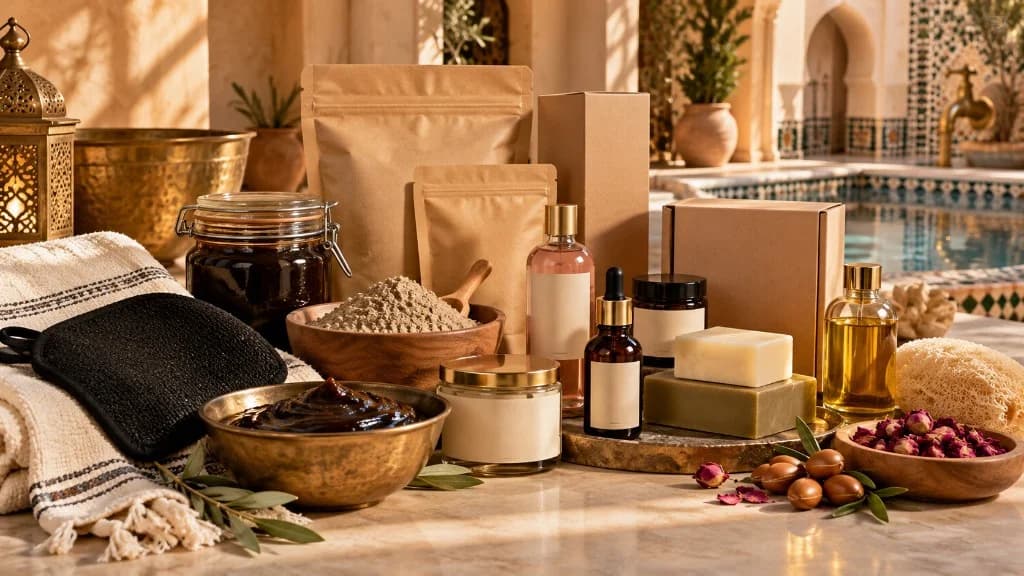
Search "Moroccan black soap wholesale" and you will find dozens of suppliers with the same photos, the same "100% organic" badge and the same promise of fast shipping. From the outside they look identical. From the inside, after X years of supplying spas, we can tell you they are not.
This checklist is what we would want to know if we were on your side of the table.
Step 1: Decide what you are really buying
Before writing to anyone, answer three questions:
- Bulk or retail-ready? A spa needs 5 kg tubs. A shop needs 200 g jars with labels. The price per kilo can differ by two or three times.
- Which products, exactly? "Hammam products" can mean black soap only, or a full set with kessa, ghassoul, oil and rose water. Write a list.
- What volume per month? Even a rough guess ("about 20 kg of soap a month") lets a supplier give you a real price.
Buyers who send a clear list get a clear quote. Buyers who write "send me your catalog and prices" usually get a generic PDF.
Step 2: Ask these questions in your first message
- Do you make the product yourselves, or buy and resell it?
- What is the MOQ per product, and can I mix products?
- What is the lead time for stock items and for private label?
- Which documents come with each shipment?
- Can you send samples, and what do they cost?
- How do you ship to my country, and what does it cost roughly?
A serious supplier answers all six in one reply. If you get vague answers to questions 1 and 4, keep looking.
Step 3: Demand the right documents
For cosmetics entering the EU, UK, US or the Gulf, you will need at least:
- COA (Certificate of Analysis) per batch, especially for oils.
- MSDS / SDS (safety data sheet).
- INCI list (official ingredient names) for your labels.
- Certificate of origin for customs.
- Organic certificate, only if you plan to sell the product as organic. Ask for the certificate number and check it on the certifier's public database.
A common mistake: buying "organic" black soap from a supplier with no organic certificate, then printing "organic" on the label. That claim can get your product pulled from shelves.
Step 4: Test samples like a professional
When samples arrive, do not just smell them. Check:
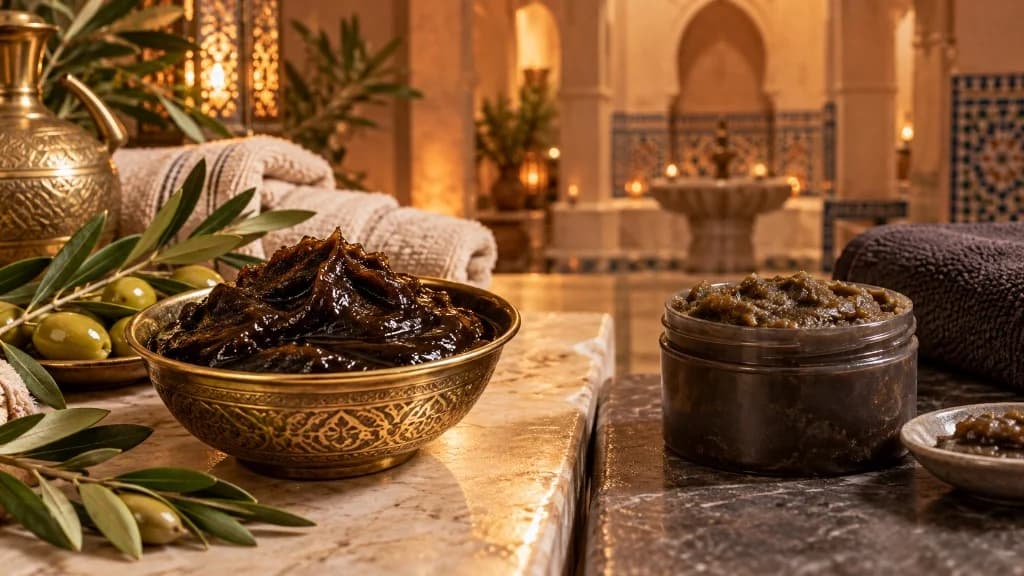
- Black soap: should be a smooth, dark olive-brown paste with an olive smell. Very liquid, very shiny, or smelling of perfume often means added water, glycerin or fragrance.
- Ghassoul: fine, soft powder, grey-brown to reddish. Grit you can feel between your fingers means poor sieving.
- Kessa: rub it on your forearm. It should grip firmly without scratching. Check the stitching at the wrist.
- Argan oil: cosmetic argan oil smells mild and nutty. A strong toasted smell means culinary (roasted) argan; almost no smell can mean it was deodorized or cut with another oil.
Then do a real treatment with your therapists. The product that looks best in a jar is not always the one that works best on skin.
Step 5: Check consistency, not just quality
The first order is usually good. The fifth order is the real test. Ask the supplier how they keep batches the same, whether they keep retained samples, and whether batch numbers are printed on the packaging. Spas tell us the biggest problem with past suppliers was not bad soap, but soap that changed from one order to the next.
Red flags
- Prices far below everyone else's for argan oil.
- No physical address, or an address that does not match the company registration.
- Product photos copied from other websites (do a reverse image search).
- "Certified" logos with no certificate available on request.
- Pressure to pay 100% before samples.
Our honest advice
Start with a small mixed order of three or four products, use them for a month, then scale. A good supplier will be happy with a small first order, because they know a satisfied spa reorders.
FAQ
- Usually yes, compared with buying from a European distributor, but add shipping, duties and your time. For small spas, a distributor can make sense.
- It depends on treatments. At about 50 g per full-body treatment, 100 treatments a month use about 5 kg.
- Ask. A supplier who refuses all visits has a reason. <!-- Internal links: "black soap" → /blog/moroccan-black-soap-quality-guide ; "kessa" → /blog/kessa-glove-guide ; "documents", "samples" → /contact ; "private label" → /private-label -->
Related articles
Product guides
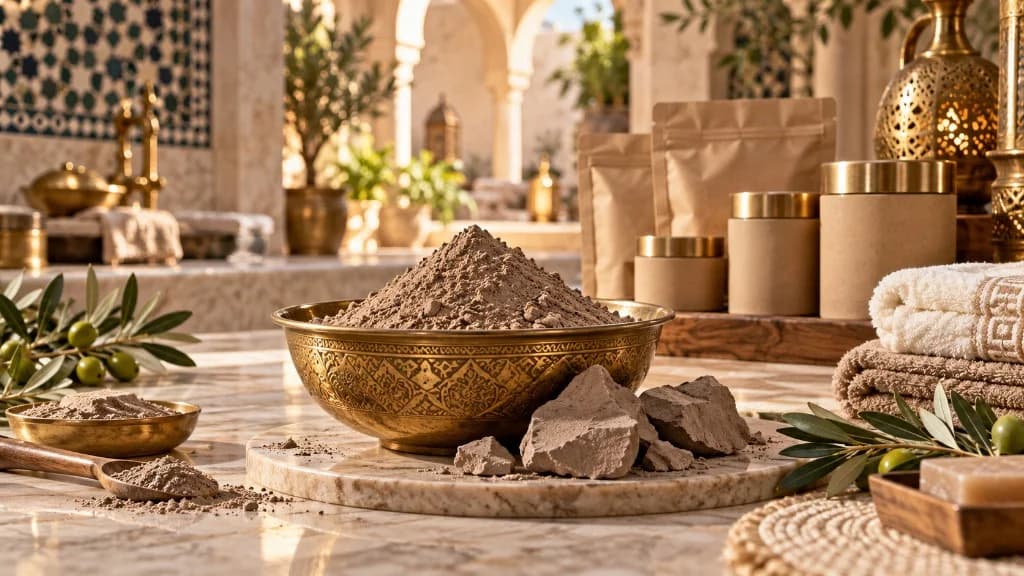
Ghassoul Clay Wholesale: A Practical Guide for Spas and Brands
Ghassoul or rhassoul? Where Moroccan clay comes from, how to judge its quality, how to mix it for body, face and hair, and what to ask a bulk supplier.
2026-10-08 · 6 min
Product guides
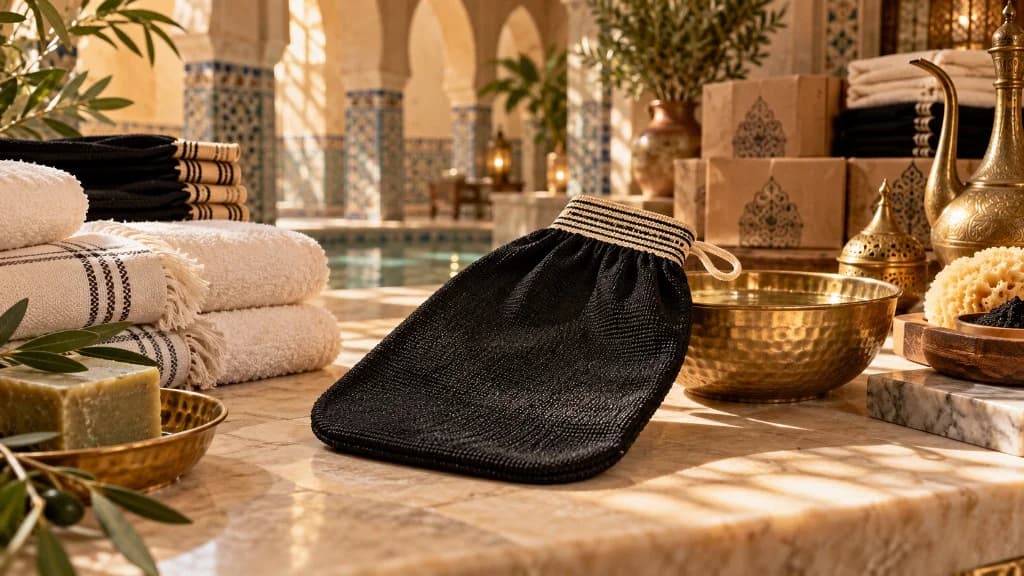
The Kessa Glove: A Buyer's Guide for Spas and Retailers
How to choose Moroccan kessa gloves for a spa or shop: fabric grades, sizes, how long they last, how to clean them, and what makes a cheap glove fail.
2026-10-08 · 5 min
Product guides
Moroccan Black Soap Wholesale: How to Tell Real Quality from a Cheap Copy
Not all beldi soap is equal. Learn how real Moroccan black soap is made, the 5 checks that reveal a cheap one, and which type suits spas or retail.
2026-10-08 · 6 min