Product guides
Moroccan Black Soap Wholesale: How to Tell Real Quality from a Cheap Copy
2026-10-08 · 6 min · Moroccan Hammam Products team, Agadir
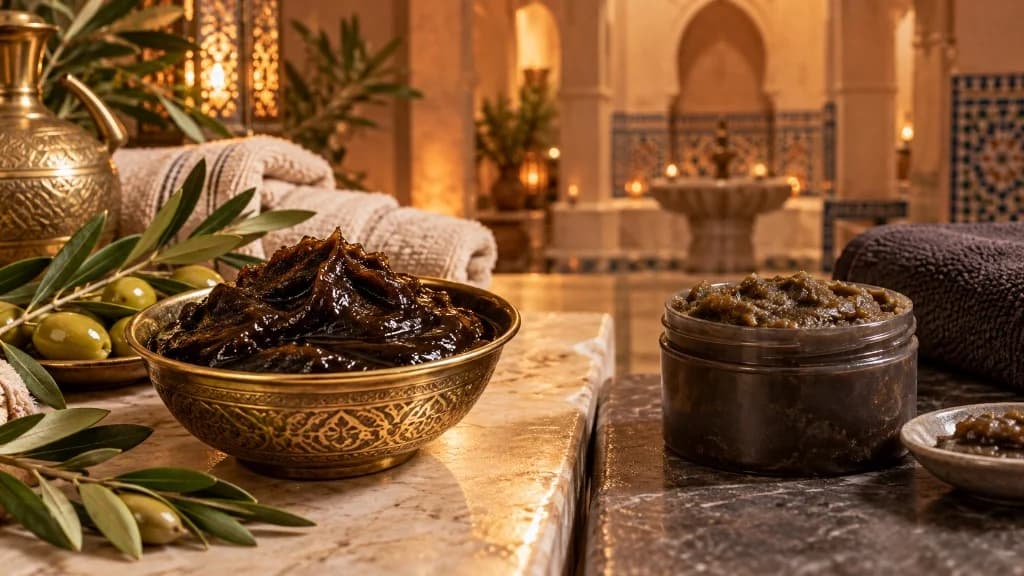
Moroccan black soap, savon beldi, looks simple: a dark paste in a jar. That is exactly why it is so easy to fake. Two jars that look the same can perform completely differently in the hammam. After years of making it, here is what we look for, and what you should too.
What real black soap is made of
Traditional beldi soap is made from olive oil (and often olive paste or crushed black olives) saponified with potash (potassium hydroxide). Potash, not caustic soda, is what gives it a soft paste texture instead of a hard bar. It is then left to cure, which makes it milder.
A typical INCI list for a plain black soap is short: Potassium Olivate, Aqua, Glycerin (formed naturally during saponification). If a "traditional" black soap lists ten ingredients, ask why.
The 5 checks for quality
1. Texture
Good black soap is a thick, smooth paste, like soft butter at room temperature. Too runny usually means extra water was added to increase weight. Too hard or crumbly can mean poor saponification or too much drying.
2. Color
Dark olive-brown to almost black, depending on the olives. Bright green or very uniform shiny black can indicate colorants.
3. Smell
Plain black soap smells of olives, slightly earthy. A strong perfume smell in a "plain" soap often hides poor raw material. Eucalyptus or rose versions should smell of the plant, not of a synthetic fragrance.
4. Behavior on skin
It should spread easily, not foam much, and rinse clean. After the kessa, skin should feel clean but not tight or burning. A stinging feeling is a warning sign of free alkali (incomplete saponification).
5. pH and batch consistency
Soap is naturally alkaline; black soap typically sits around pH 9 to 10. Ask your supplier for the pH range per batch. More important than the number is that it stays the same from batch to batch.
Types of black soap and who they suit
| Type | Smell and feel | Best for |
|---|---|---|
| Plain (beldi) | Olive, earthy | Purists, sensitive skin, spa base product |
| Eucalyptus | Fresh, opens the breathing | Steam rooms, winter menus, men's ranges |
| Argan | Softer finish | Retail, dry skin |
| Rose | Floral, gentle | Bridal hammam, gift sets |
| Orange blossom | Sweet, light | Retail, Middle East markets |
Bulk vs retail packaging
- Spas: 1 kg or 5 kg tubs. Scoop with a clean spatula, never wet hands, to keep water out of the tub.
- Retail: 200 to 250 g jars with a wide opening. Tubes and pumps rarely work well with a thick paste.
- Shelf life: 24 months closed. Keep away from heat; very high temperatures can soften and separate the paste.
Why price varies so much
Olive oil is the biggest cost. Soap made with low-grade oil, extra water or fillers is cheaper to make and looks the same in a photo. When one quote is far below the others, compare samples side by side in a real treatment before deciding.
Mistakes buyers make
- Buying on price alone, then losing clients who notice the difference.
- Not asking for the INCI list until label printing day.
- Choosing a heavily perfumed version for a spa where clients have sensitive skin.
- Storing bulk tubs next to the sauna heater.
FAQ
- No. African black soap (from West Africa) is made from plantain skins, cocoa pods and shea; it is usually a bar. Moroccan black soap is an olive-oil paste.
- Yes, if the olive oil and other ingredients are certified and the producer holds a valid certificate. Ask for it.
- About 40 to 60 g for a full body. <!-- Internal links: "hammam" → /blog/moroccan-hammam-treatment-steps-spa ; "kessa" → /blog/kessa-glove-guide ; "INCI list", "samples" → /contact ; "gift sets" → /blog/private-label-hammam-kit -->
Related articles
Product guides
Ghassoul Clay Wholesale: A Practical Guide for Spas and Brands
Ghassoul or rhassoul? Where Moroccan clay comes from, how to judge its quality, how to mix it for body, face and hair, and what to ask a bulk supplier.
2026-10-08 · 6 min
Product guides
The Kessa Glove: A Buyer's Guide for Spas and Retailers
How to choose Moroccan kessa gloves for a spa or shop: fabric grades, sizes, how long they last, how to clean them, and what makes a cheap glove fail.
2026-10-08 · 5 min
Spa guides
Moroccan Hammam Treatment Steps: A Protocol Your Spa Can Use Tomorrow
A step-by-step Moroccan hammam protocol for spas: timings, product amounts per client, therapist tips, and the mistakes that make clients not come back.
2026-10-08 · 8 min